Main guide · 10 steps
How to start your own olive oil brand
You do not need a farm or a mill. Here are the 10 steps, from choosing the oil to your first sale.
Main guide · 10 steps
You do not need a farm or a mill. Here are the 10 steps, from choosing the oil to your first sale.
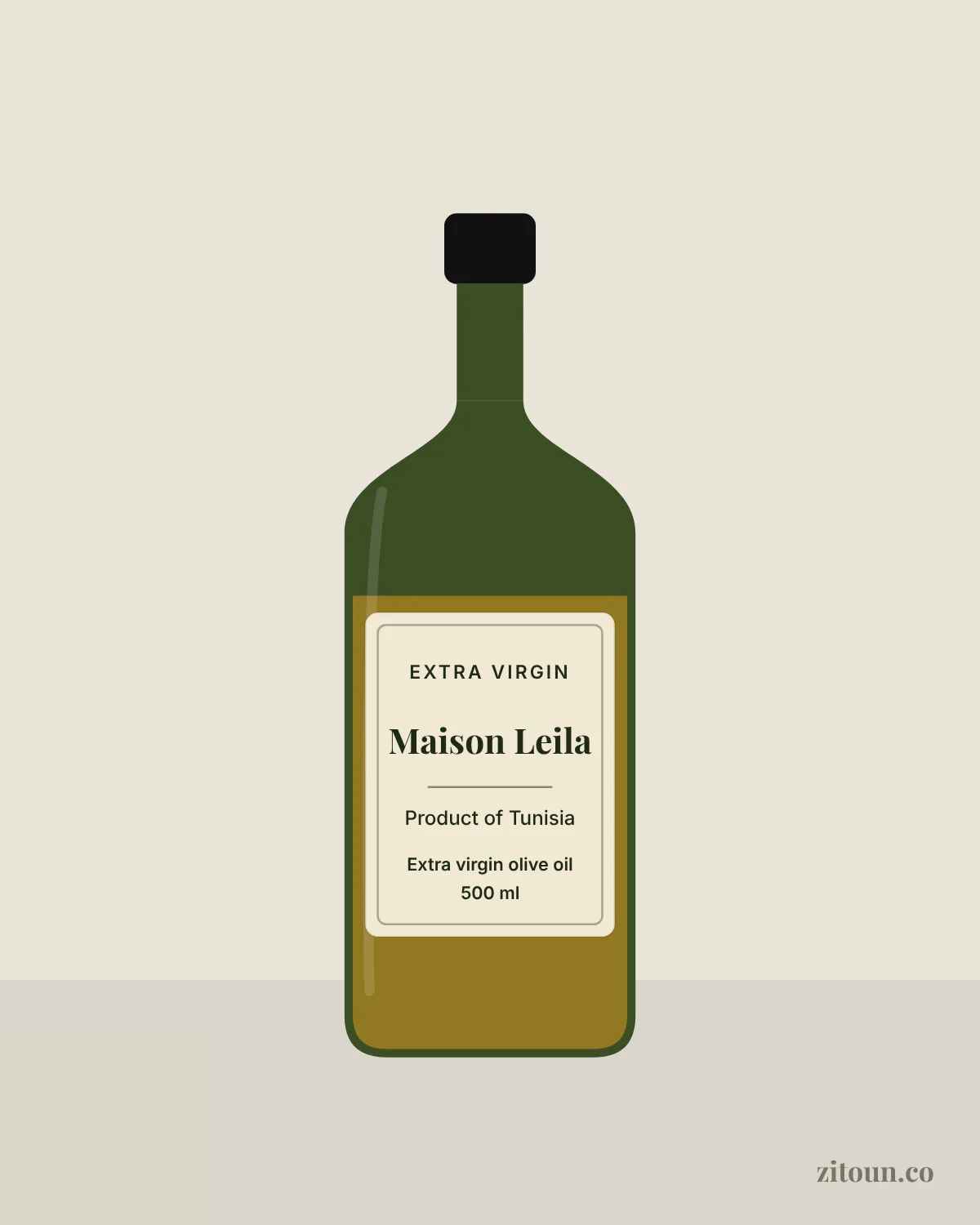
Short answer: to start an olive oil brand, pick who you sell to, choose an oil and a private-label partner who bottles it for you, design a label that meets the rules of the country you sell in, work out your cost per bottle and price, order a first batch (from 200 bottles), and test it with real customers before scaling. Most of the work is branding and selling; the partner handles oil, bottling and paperwork.
A brand for restaurants, a gift brand and a supermarket brand need different bottles, prices and labels. Write one sentence: "I sell [oil] to [customer] who buys it for [reason]." Example: "Peppery single-variety oil for home cooks in Paris who want something different from supermarket oil."
Start with one oil. Extra virgin is the category customers expect for a premium brand. Choose between a mild oil (Tunisian Chemlali) and a bold, peppery one (Chetoui), or a blend. See Chemlali vs Chetoui.
White label means a stock oil and standard bottle with your label; private label means the oil, bottle and specs are chosen for you. White label is faster and cheaper to start. Compare both.
Ask every partner for: minimum order, a recent lab report for the oil, the harvest date, bottle options, lead time and who handles export papers. A good partner sends samples before you pay for a full batch.
Check the name is free as a trademark in the countries you will sell in, and that the domain and social handles are available. Your label needs room for the legal information, so design around it.
Olive oil labels have extra rules. In the EU, the category name and its description, the origin, the storage advice and the usual food information are mandatory. Read the EU guide or the US guide.
Add oil, bottle, cap, label, filling, lab test, packaging, shipping, duties and payment fees. Then multiply by about 2 for wholesale and 3–4 for retail as a starting point. See the full cost breakdown.
200 bottles is the minimum and enough to test the market. Keep a few for photos, samples for shops and tastings.
Track what sells, to whom and at what price. Add a second oil, a gift box or a larger size only once the first one sells.
No. Most brands buy oil from mills and work with a bottler. You focus on the brand and on selling.
Start with the minimum of 200 bottles: enough to supply a few shops and test demand without tying up too much cash.
To sell, you usually need a registered business in your country, and you are responsible for the label as the brand owner. Check local rules with an accountant.
Tell us what you want. We reply within 24 hours with samples and a price.
Every cost in a bottle of private-label olive oil, a worked formula, and how to set wholesale and retail prices.
Read more →What must appear on an olive oil label in the EU under Regulation (EU) 2022/2104 and the food information rules: category, origin, storage, quantity and more.
Read more →Launch your own olive oil brand with Tunisian extra virgin olive oil. Your label, your bottle, from 200 bottles, delivered to the EU, UK, US and Gulf.
Read more →