Guide · Olive varieties
Chemlali vs Chetoui: which Tunisian olive oil to choose
Tunisia's two best-known varieties give very different oils. Here is how to choose.
Guide · Olive varieties
Tunisia's two best-known varieties give very different oils. Here is how to choose.
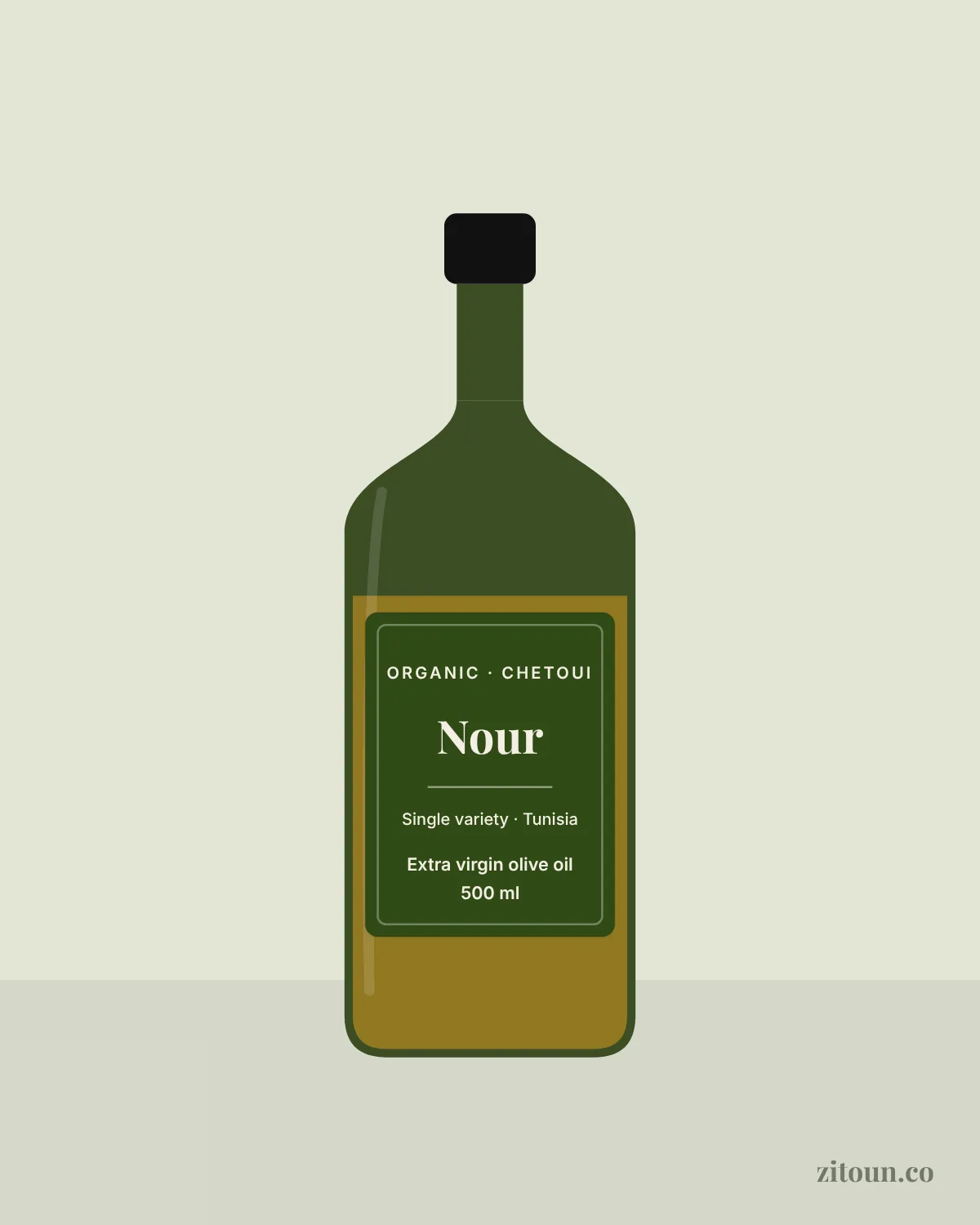
Short answer: Chemlali is Tunisia's most planted olive, grown mainly in the centre and south around Sfax; its oil is mild, smooth and slightly sweet, which suits everyday cooking and people new to extra virgin oil. Chetoui grows mainly in the north; its oil is greener, more bitter and peppery, which suits drizzling, salads and customers who like bold taste. Many brands offer both, or a blend.
| Chemlali | Chetoui | |
|---|---|---|
| Main regions | Centre and south (Sfax, Sousse, Mahdia) | North (Béja, Jendouba, Bizerte and around) |
| Taste | Mild, smooth, buttery, light fruit | Green, grassy, bitter, peppery finish |
| Best for | Cooking, baking, first-time buyers | Drizzling, salads, bread, food lovers |
| As a gift | Safe choice for everyone | Stands out for foodies |
The best way to decide is to taste them side by side. Order samples.
Tell us what you want. We reply within 24 hours with samples and a price.
Key facts about Tunisian olive oil: production, exports, bulk vs bottled, Chemlali and Chetoui varieties, with sources.
Read more →Taste our Tunisian extra virgin olive oils before you choose. Request samples for your brand, gifts or restaurant.
Read more →How to read an extra virgin olive oil lab report: acidity, peroxide value, K232, K268, delta-K and the taste panel, with the EU and IOC limits.
Read more →